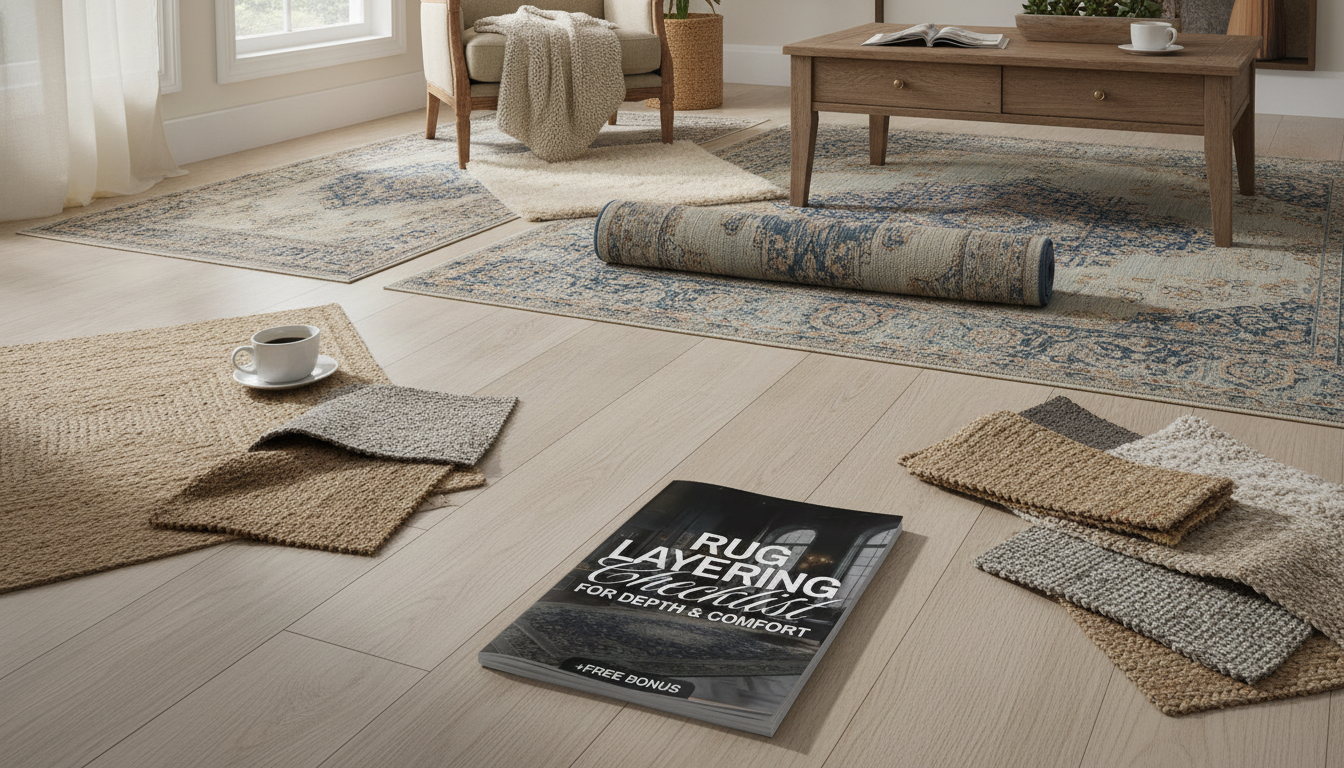
Layered rugs can turn a flat, echoey room into a space that feels finished, warm, and visually grounded. The key is treating rug layering like a simple system: a stable foundation (base rug), a personality piece (top rug), and a clean border that makes the pairing look intentional—not cluttered. If you want a step-by-step reference you can use while measuring and shopping, the Rug Layering Checklist for Depth & Comfort | Digital Download | Carpet and Rug Layering for Depth and Comfort Guide keeps the decisions practical and easy to repeat from room to room.
Layering is also a smart way to make hard-surface rooms feel quieter. If you’re balancing acoustics and comfort, design resources like American Society of Interior Designers (ASID) can be useful for understanding how soft materials impact everyday livability.
A quick rule: if the top rug feels like it’s “floating,” the top layer is usually too small—or the border is too wide for the room scale. Shrink the border or size up the top rug until the arrangement reads as one cohesive zone.
| Room | Base Rug Goal | Top Rug Goal | Typical Border Showing |
|---|---|---|---|
| Living room | Anchor seating group; cover the main footprint | Add focal pattern/texture near coffee table | 6–18 in (15–45 cm) |
| Bedroom | Add warmth around bed perimeter | Soft landing at foot or bedside zone | 6–24 in (15–60 cm) |
| Dining | Protect floor and define table area | Optional accent if chairs glide smoothly | 4–12 in (10–30 cm) |
| Entry | Durable foundation for traffic | Absorb dirt/water; easy swap/clean | 2–10 in (5–25 cm) |
If you’re choosing rugs based on care instructions (especially for natural fibers or blends), it helps to understand standard textile labeling and cleaning guidance. The Federal Trade Commission (FTC) provides general consumer information that can support smarter care expectations.
For bedrooms, layering can look especially polished when the surrounding casegoods are visually “quiet.” A clean-lined piece like the Mid Century Modern 3 Drawer Dresser pairs well with patterned top rugs because it doesn’t compete for attention.
In a home office, comfort and mobility need to coexist. If you’re using a rolling chair like the Sleek Black Height Adjustable Swivel Office Chair, choose flatter weaves (especially for the top layer) and keep edges away from the chair’s most-traveled path to prevent catching.
To keep these steps handy during measuring and setup, use the Rug Layering Checklist for Depth & Comfort (Digital Download) as a quick-reference guide you can revisit room by room.
Yes—use a low-profile top rug, add corner grippers or carpet-safe tape, and keep edges out of main traffic paths to reduce rippling and shifting.
The top rug is typically centered and smaller than the base, leaving a visible border (often 6–18 inches) that’s adjusted for room scale and furniture placement.
Yes. Rug pads help reduce sliding, add comfort, protect flooring, and can improve acoustics; size the pad slightly smaller than the rug perimeter for cleaner edges.












Leave a comment