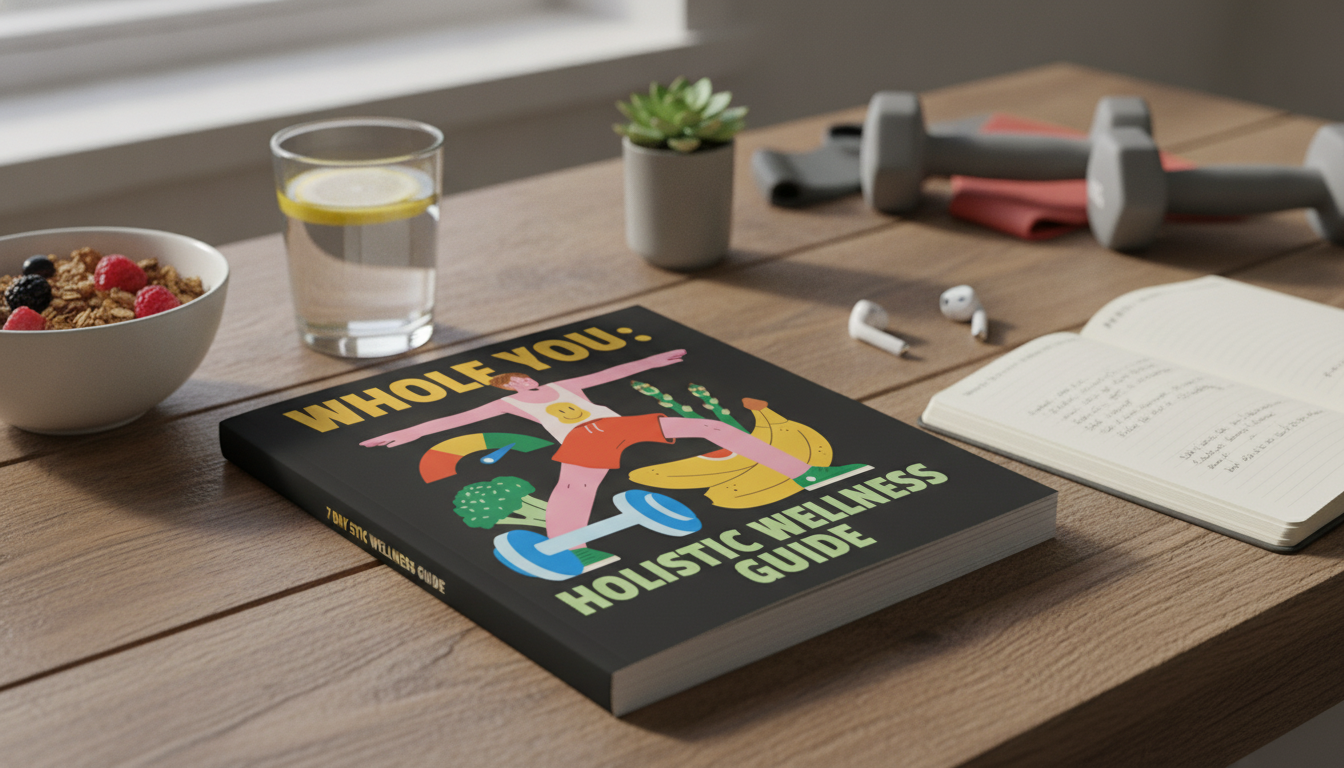
A holistic approach makes health habits work together instead of competing for attention. Rather than trying to overhaul everything at once, this reset breaks wellness into simple, connected foundations—nutrition, movement, mental health, and self-care—so beginners can build steady routines without burnout, guilt, or all-or-nothing thinking.
Holistic wellness is less about doing more and more about aligning the basics so they reinforce each other. Food affects energy and mood. Movement improves sleep and stress. Better sleep makes cravings easier to manage. When beginners focus on the full system—food, movement, sleep, stress, relationships, and environment—progress tends to feel steadier and more livable.
For one week, practice one habit per pillar every day. Keep tracking lightweight so it doesn’t become another chore: sleep hours, steps (or minutes moved), servings of plants, and a simple stress rating from 1–10. Avoid total overhauls—swap, add, or reduce one small thing at a time.
On day 7, review: keep what felt doable, tweak what didn’t, and add just one new habit for week 2. This keeps momentum without triggering the “too much, too soon” crash.
| Pillar | Daily habit (10–20 minutes) | Easier option | Signal to notice |
|---|---|---|---|
| Nutrition | Add 1 fruit or vegetable to one meal | Add a side of baby carrots or frozen veg | Energy dip timing |
| Movement | 10-minute walk after a meal | 5-minute walk + stretch | Mood change after moving |
| Mental health | 2 minutes of slow breathing | One long exhale x 10 | Stress rating (1–10) |
| Self-care | Same bedtime window (±30 min) | Set a “screens down” alarm | Time to fall asleep |
Nutrition gets easier when it’s framed as support, not restriction. A simple rule that reduces backlash is “add before subtract”: add protein, fiber, and hydration before cutting foods. This approach often improves fullness and steadies energy without feeling like a punishment.
For basic nutrition guidelines, the World Health Organization’s healthy diet overview offers a clear, evidence-based starting point.
The best movement routine is the one that repeats. Walking, gentle strength, mobility work, cycling, and dancing can all “count” when they fit your schedule and body. A strong starting point is a minimum daily dose—10 minutes—because it builds identity (“I’m someone who moves”) without requiring perfect conditions.
For activity basics and realistic targets, the CDC’s Physical Activity Basics is a reliable reference.
Beginner mental wellness works best when tools are quick, repeatable, and available on rough days. Regulation practices don’t need long sessions to help; consistency matters more than intensity.
Self-care is most effective when it separates maintenance (helpful tasks) from restoration (what refuels you). Cleaning the kitchen might reduce stress later, but it may not restore your nervous system in the moment—both matter, but they aren’t the same.
Sleep is a major multiplier; the NIH guidance on sleep deprivation highlights how sleep affects daily function and long-term health.
Small changes can improve energy, digestion, or mood within a few days, especially when sleep and daily movement get more consistent. Strength, body composition, and deeper stress resilience usually take weeks, so tracking signals like sleep quality, cravings, and stress helps guide weekly adjustments.
Starting with one small habit in each pillar keeps progress balanced, but if everything feels overwhelming, prioritize sleep and daily movement first. Better sleep and lower stress often make nutrition and mental health habits easier to maintain.
Yes—use a minimum baseline: a 10-minute walk, one balanced meal add-on (like adding a vegetable or protein), 2 minutes of breathing, and a consistent bedtime window. Batching (prep once, eat twice) and setting up your environment reduce time and decision fatigue.












Leave a comment