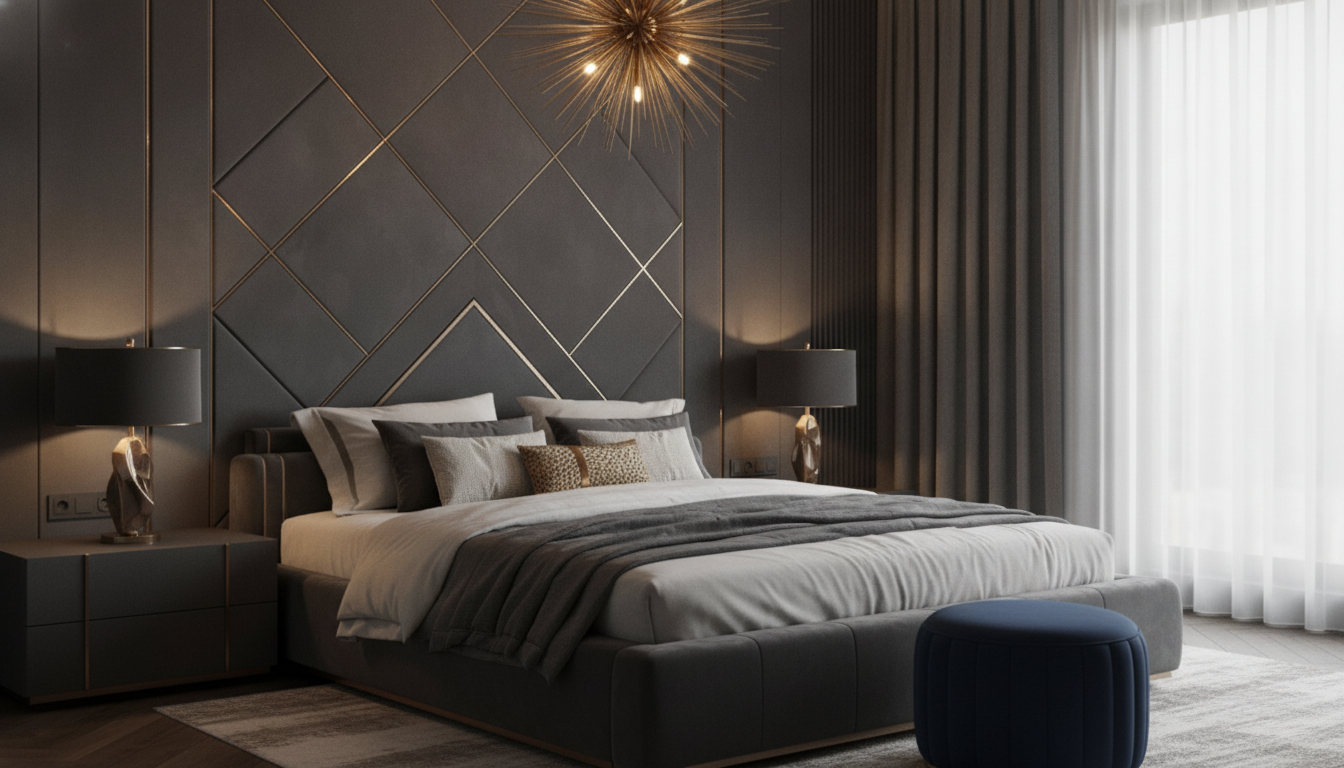
A luxury bed frame should elevate comfort, durability, and the overall look of the bedroom. Use the checklist-style guidance below to narrow down materials, construction details, sizing, and styling choices—then keep a printable version on hand while shopping and measuring.
Before falling in love with a silhouette, confirm the bed will fit the room in a way that feels effortless day to day. A “perfect” frame can still feel wrong if it crowds the walkway or blocks a closet.
| Area | Recommended clearance | Why it matters |
|---|---|---|
| Walkway along bed sides | 24–36 in (61–91 cm) | Reduces cramped feel and improves daily movement |
| Foot of bed to dresser/bench | 30–42 in (76–107 cm) | Allows drawers to open and provides standing space |
| Door swing path | Full swing radius + 2–4 in | Prevents collisions with bed corners and nightstands |
| Between nightstand and wall | 2–6 in (5–15 cm) | Prevents scuffs and allows cord routing |
Luxury isn’t just about the finish—it’s the way the bed works with your body and routine. Get the fundamentals right first: size, sit-to-stand height, and support type.
As a quick comfort target, many adults find a finished bed height (floor to top of mattress) around knee level easiest to get in and out of—often roughly 22–28 inches, depending on height and mobility.
Frame type sets the visual tone of the room and changes how the bed behaves—noise, cleaning access, and long-term durability.
A luxury bed frame should feel stable when you sit on the edge, change positions at night, or tighten bedding. These build details separate “looks expensive” from “built to last.”
Also confirm mattress support requirements. Warranty language can be specific about foundation type and slat spacing—review manufacturer guidance and general warranty considerations from Sleep Foundation’s mattress warranty guide.
A cohesive bedroom is less about matching sets and more about repeating a few intentional cues—finish, shape, and texture—so the space feels layered and calm.
If you’re planning a furniture pairing, measure drawer clearances early and select storage that complements the bed’s lines. A warm, streamlined option that works well with many wood or upholstered frames is the Mid Century Modern 3 Drawer Dresser.
For broader shopping best practices—especially around comparing claims, warranties, and return policies—review the Federal Trade Commission’s shopping and buying guidance.
To keep everything in one place, use the How to Choose Luxury Bed Frame – Printable Checklist (Digital Download).
A platform frame can be better because it typically provides direct, even support with slats or a solid deck and often eliminates the need for a box spring. A box spring can still be useful when a mattress brand specifies it for proper support, height, or warranty requirements—so confirm slat spacing and follow the mattress manufacturer’s guidance.
Look for center support (especially for queen and king), strong corner reinforcement, and legs that are placed where weight is concentrated. Check the number and spacing of slats, the quality of fasteners and joinery, and whether the frame stays stable when you sit on the edge—minimal wobble is a key sign of solid construction.
A comfortable finished height is often around 22–28 inches from the floor to the top of the mattress, but the best choice depends on mobility, mattress thickness, and whether you want underbed storage. Also consider visual proportions: thicker mattresses usually look best on lower-profile frames, while thinner mattresses can pair well with taller silhouettes.












Leave a comment