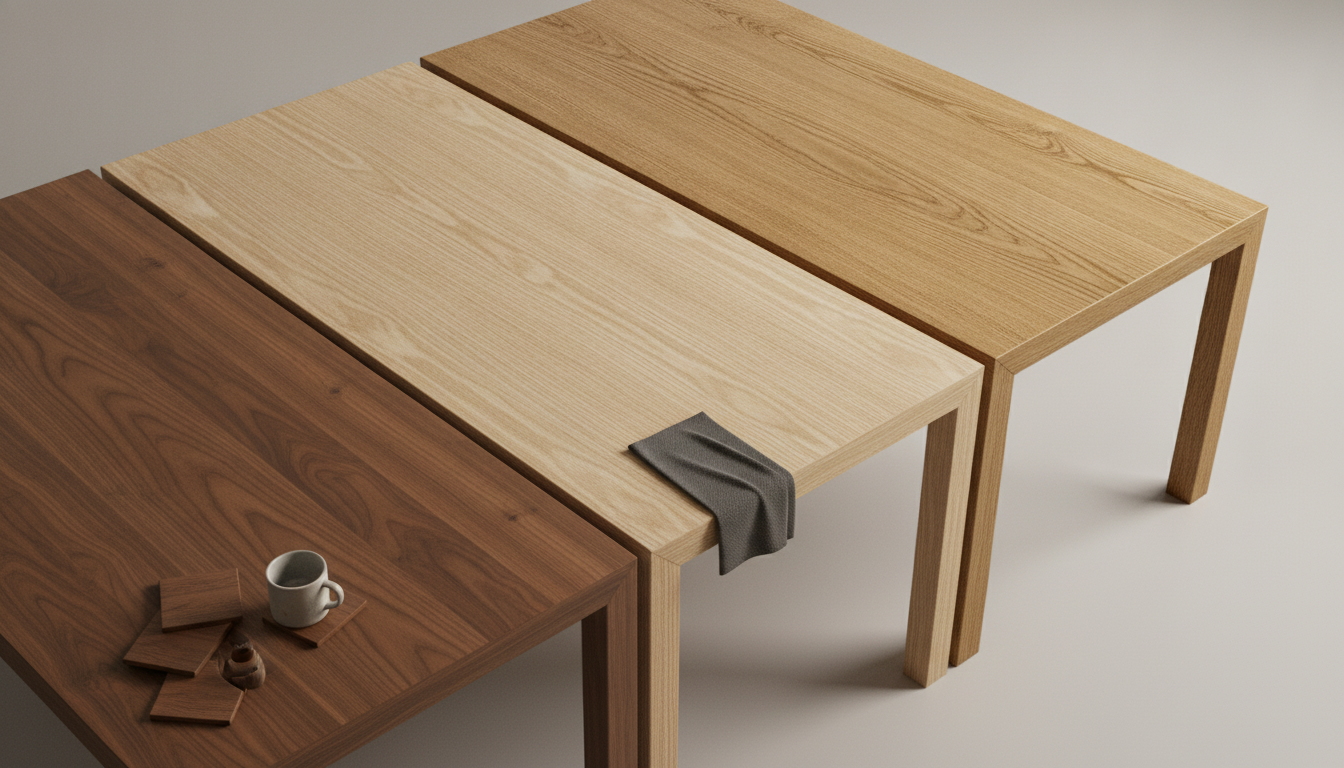
The best solid wood for a table is usually hardwood that matches how the table will be used. For everyday dining tables and busy family spaces, white oak is a top pick because it’s tough, stable, and handles bumps and moisture changes better than many woods. If the goal is a smoother, more formal look with excellent strength, hard maple is another standout. For a classic, warm-toned table that’s durable and widely available, walnut and cherry are premium choices—especially when the table is more about craftsmanship and style than heavy daily wear.
Softwoods like pine can work for a rustic look or lighter-duty use, but they dent and scratch more easily. That doesn’t make pine “bad”—it just means the finish and expectations matter more, and a few character marks will show up faster.
White oak has a tight grain and strong structure, making it highly resistant to everyday impacts. It’s also less likely to warp compared to many options, which matters for wide table tops. Its grain pattern suits both modern and traditional designs, and it takes stain well.
Hard maple is dense and smooth, which makes it great for a sleek surface and a lighter, more uniform appearance. It’s commonly chosen when the goal is a minimal look with excellent long-term toughness. It can blotch with some stains, so many owners prefer clear or lightly tinted finishes.
Walnut offers deep, luxurious color and a refined grain. Cherry starts lighter and darkens beautifully over time, developing a warm, classic tone. Both are durable, but they’re often selected for their look and aging character as much as their hardness.
For a deeper comparison of solid wood options, including pros, cons, and practical buying tips, read the full guide here: What is the best solid wood for a table?.
White oak and hard maple are excellent for daily use because they resist dents and hold up well over time. If you want a darker, upscale look, walnut is a strong choice, though it may show dings a bit more than oak or maple.











Leave a comment