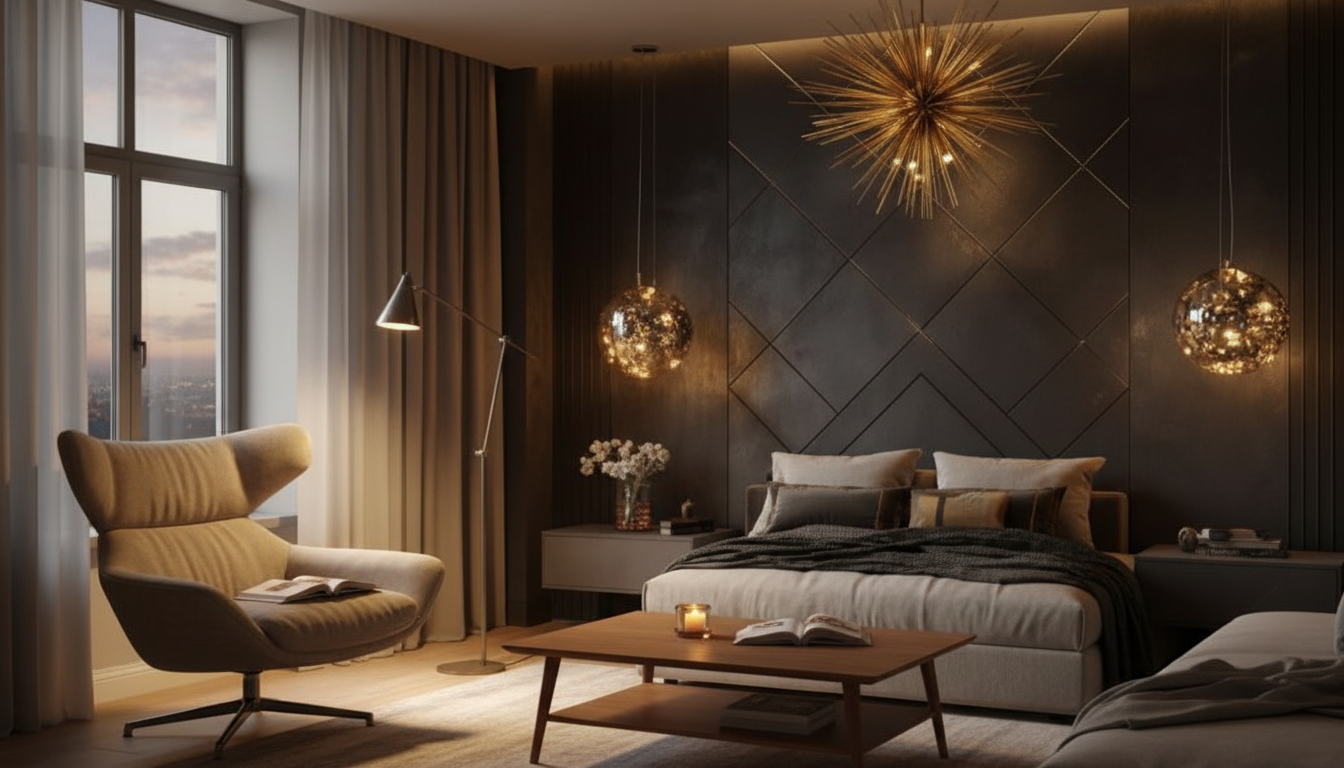
Layered lighting balances comfort, function, and mood by combining ambient, task, and accent sources. This planner-style playbook turns lighting choices into a simple checklist so each room feels intentional—bright where it needs to work, soft where it needs to rest, and focused where it needs to highlight.
Most lighting problems aren’t about “needing a nicer fixture”—they’re about relying on one type of light to do every job. Layering breaks lighting into three roles so you can dial in comfort and clarity.
A strong plan uses at least two layers in most rooms; three layers delivers the most flexibility. Just as important: control. Dimmers, multiple switches, and smart scenes make layers feel coordinated instead of chaotic.
Before buying anything, walk each room and note what feels “off”: glare, shadows on work surfaces, dark corners, flat-looking walls, or harsh overhead-only light. Track natural light patterns by time of day, list the activities that happen there, and check switch/outlet locations to see what can be plug-in vs. hardwired.
Also look at your bulbs. Mixed color temperatures (some warm, some cool) can make a space feel patchy even when the fixtures are fine.
| Audit item | What to note | Quick fix idea |
|---|---|---|
| Current ambient light | Too dim/too bright, uneven areas | Add floor lamp, use higher-lumen bulb, add dimmer |
| Task needs | Counters, desk, reading chair, vanity shadows | Under-cabinet lights, desk lamp, bedside sconces |
| Accent opportunities | Art, shelving, plants, textured walls | Picture light, adjustable spot, LED strip in shelves |
| Glare sources | Bare bulbs, shiny surfaces, screen reflections | Shade/diffuser, reposition, lower CCT, add dimmer |
| Control & zones | Single switch for everything? | Split circuits, smart bulbs, plug-in dimmers |
Ambient light should make a room feel easy to navigate—without making it feel like a showroom. Choose the primary source (ceiling fixture, recessed, cove lighting, or a mix of lamps) and aim for even distribution. Multiple smaller sources often feel better than one intense overhead because they reduce harsh shadows and “hot spots.”
Bedrooms benefit from gentle accent light on furniture or architectural details. For example, a warm strip light behind a dresser can give a calm hotel-like glow without turning on the overhead—especially when styling a statement piece like the Mid Century Modern 3 Drawer Dresser.
| Area | Preferred feel | Common approach |
|---|---|---|
| Living room | Warm and relaxing | Dimmable ambient + floor lamp + accent on art/shelves |
| Kitchen | Clear and functional | Bright task on counters + balanced ambient + selective accents |
| Bathroom | Accurate and clean | Mirror-face lighting + ceiling ambient + shower accent (optional) |
| Bedroom | Soft and calm | Low-glare ambient + bedside reading + gentle accent |
| Hall/entry | Safe and welcoming | Even ambient + optional accent on console/art |
For bulb quality and efficiency basics, consult ENERGY STAR’s light bulb guidance and the U.S. Department of Energy overview of LED lighting.
If you want a fast, repeatable system, use the Playbook to Layered Lighting Checklist (digital download) to map each room’s ambient, task, and accent layers before buying anything. Keep one page per room with fixture type, location, bulb tone, and control notes—then upgrade in phases: fix task lighting first, add accents next, and refine ambient distribution last.
For deeper technical lighting recommendations and best practices, the Illuminating Engineering Society (IES) is a leading authority in lighting guidance and standards.
A practical rule is to plan at least two layers in most rooms (ambient + task), and ideally three (add accent) for flexibility. Instead of counting fixtures, aim for multiple switchable zones and include dimming so the same room can handle work, relax, and entertaining.
Ambient lighting fills the room for general visibility (overhead fixtures or distributed lamps). Task lighting targets work areas like desks, counters, and vanities (desk lamps, under-cabinet strips, mirror lights), while accent lighting highlights features like art or shelving (picture lights, adjustable spots, LED strips).
Choose a consistent tone per room: warmer light tends to feel calmer in living rooms and bedrooms, while neutral light supports clarity in kitchens and bathrooms. Prioritize high color accuracy where it matters and use dimming to adapt the same fixtures from daytime brightness to evening softness.










Leave a comment