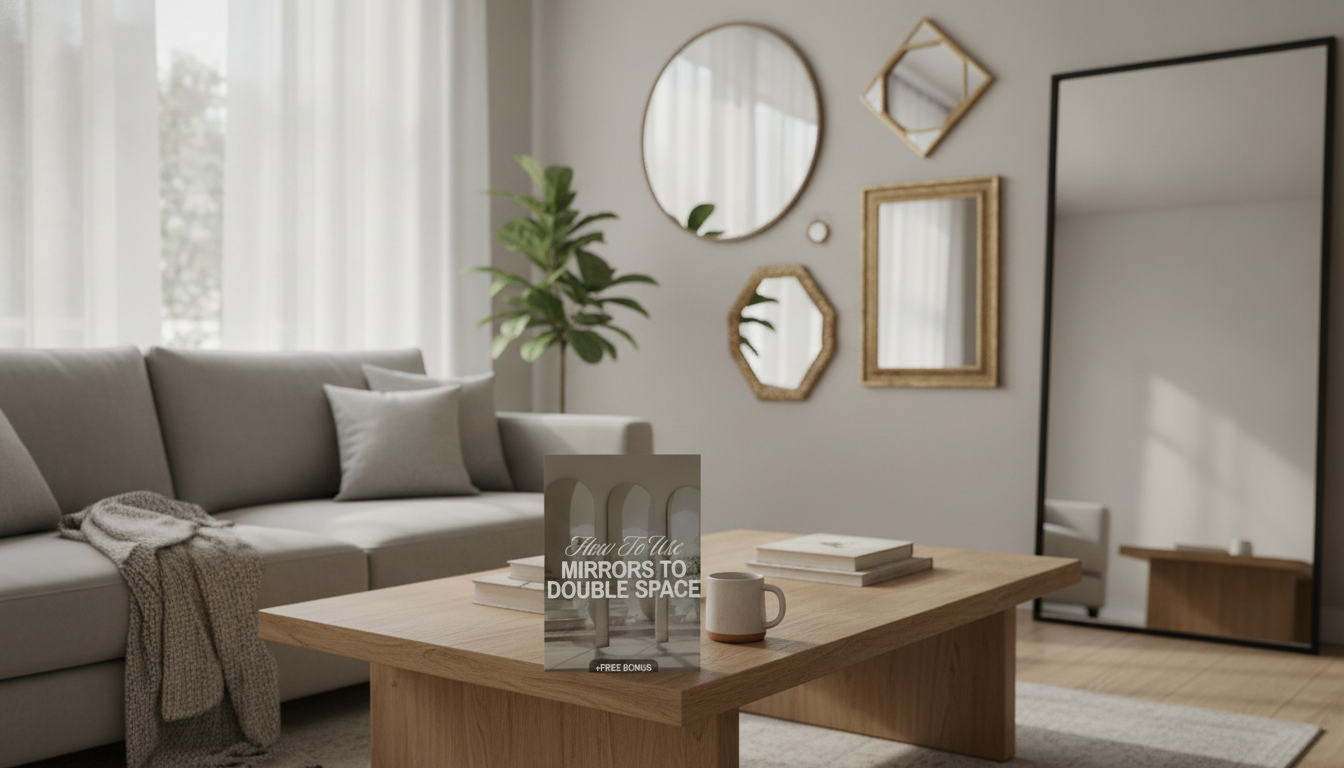
Mirrors don’t add square footage, but they can make a room feel noticeably larger by creating perceived depth, bouncing light, and repeating strong visual lines. When the reflection reads as an extension of the room—rather than a replay of clutter—walls feel farther apart and corners feel less “boxed in.” For more guidance, see The Role of Mirrors in Interior Design: Light, Space and Illusion.
The biggest wins come from reflecting something worth looking at: a window, a warm lamp glow, a centered piece of art, or a simple vignette like a plant on a console. The fastest way to shrink a room with a mirror is to aim it at messy surfaces, harsh glare, or awkward angles that emphasize tight circulation. For further reading, see The Art of Mirror Placement: Maximize Light and Space in Interior ….
Placing a mirror opposite your largest window is the classic move for a reason: it pulls daylight deeper into the room and visually extends the wall plane. Go as large as the wall can comfortably support so the reflection reads as one clean “opening,” not a small shiny patch.
If direct sun creates hotspots on the sofa or TV wall, move the mirror to the adjacent wall instead. You’ll still bounce light through the space, but the reflection is softer and easier to live with throughout the day.
Try a mirror behind a table lamp, sconce, or pendant to multiply warm light after sunset. This placement is especially helpful in studios or apartments where you rely on layered lighting and want the room to feel less flat at night.
A mirror at the end of a corridor creates a strong “pull” that makes the hallway feel longer. Choose a frame that relates to nearby trim, door hardware, or lighting finishes so it feels intentionally integrated rather than tacked on.
Mirrors behind a sofa or near a dining table can reflect movement and light, making gatherings feel livelier and the room feel more open. Make sure the reflection includes something purposeful—like a chandelier, centered tablescape, or art—so the mirror adds calm rather than visual chaos.
When the goal is expansion, oversize mirrors typically deliver the cleanest illusion because fewer frame breaks interrupt the reflective plane. The eye reads continuity, and continuity reads as “more space.”
Use the mirror’s orientation to correct what the room lacks: vertical mirrors emphasize ceiling height, while horizontal mirrors emphasize width. If the room feels rigid and boxy, arched or oval shapes soften corners. If the space is modern (or you want it to feel more tailored), rectangular mirrors align nicely with cabinetry, trim lines, and furniture edges.
Leaning floor mirrors are flexible and dramatic, but they must be secured properly—especially in homes with kids or pets—so the look stays safe and stable.
| Room goal | Best mirror type | Where to place it | What to reflect |
|---|---|---|---|
| Brighter living room | Large rectangular or arched wall mirror | Across or adjacent to the biggest window | Window light + a clean focal point |
| Wider narrow hallway | Horizontal mirror or a series of matching mirrors | Along the long wall at eye level | Light fixtures, artwork, or a console vignette |
| Taller-feeling bedroom | Full-length vertical mirror | Near closet/dresser or on a narrow wall | Open floor area (not the bed’s clutter zone) |
| Bigger-feeling dining area | Statement mirror with medium frame | On the wall that faces the table | Chandelier/pendant + centered tablescape |
A mirror can be a “quiet” design tool or a loud one. The difference often comes down to frame thickness, finish, and what sits around it.
For more general mirror placement principles, see guidance from The Spruce and inspiration examples from Architectural Digest.
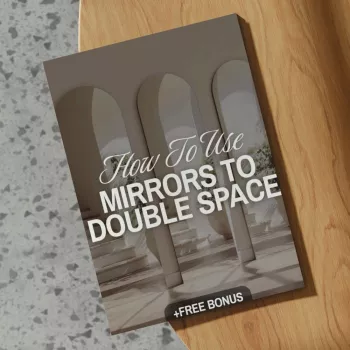
If you want a faster path from “where do I even start?” to a finished layout, a structured plan helps you choose the right mirror size, pick the best wall, and avoid reflections that make the room feel busier. The How to Use Mirrors to Double Space | Digital Guide for Small Room Interior Design, Home Decor, AI Space Planning & Mirror Styling Tips walks through placement tests, reflection checklists, and styling templates designed for small bedrooms, studios, and apartments.
To support the “expanded” look, pair mirrors with furniture that keeps visual weight low and surfaces easy to style—like a streamlined dresser or a compact chair that tucks in neatly. A piece such as the Mid Century Modern 3 Drawer Dresser gives you closed storage (less clutter in reflections), while the Sleek Black Height Adjustable Swivel Office Chair works well in tight work corners where you want mobility without bulky shapes.
Place it across from or adjacent to the largest window to bounce light and extend sightlines. Then confirm the reflection shows a clean focal point (like art or greenery), not clutter.
Yes when you want maximum brightness, but move it to the adjacent wall or angle it slightly if glare becomes uncomfortable. The goal is soft, useful light—not harsh hotspots.
Bigger usually looks better because it creates a more continuous reflective plane. A reliable rule is 2/3 to 3/4 the width of the furniture beneath it.









Leave a comment