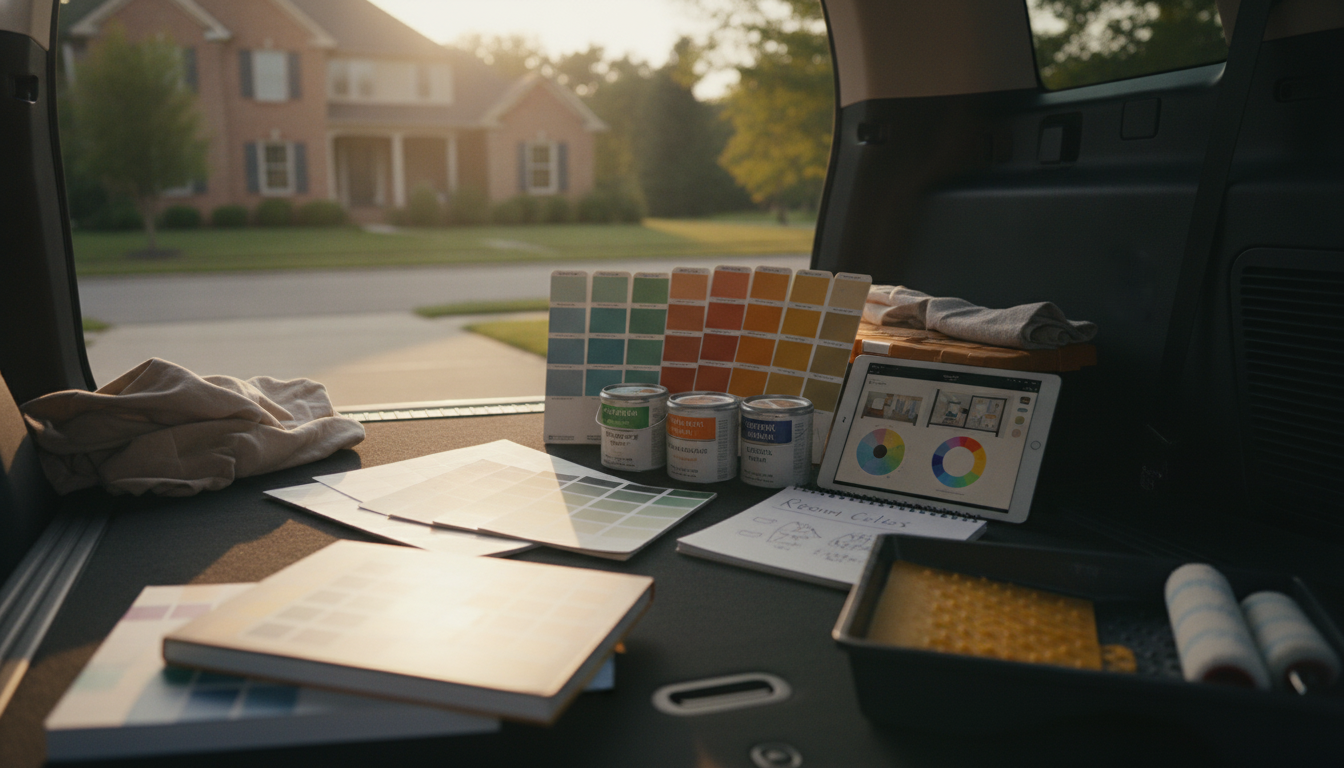
Harmonizing your color palette means making every color in a room feel intentional, connected, and easy on the eyes. The goal isn’t to match everything—it’s to create a clear relationship between wall color, large furniture, textiles, and accents so the space reads as one cohesive story.
Choose one dominant neutral to act as your foundation (warm whites, greige, taupe, soft gray). This “home base” is what lets other colors shine without making the room feel busy. Anchor big-ticket items—sofa, bed frame, area rug—in this calm zone when possible, especially in open-concept spaces.
Select 2–3 supporting colors that share a common undertone. For example, if your neutral leans warm, pair it with warm wood tones, creamy textiles, and accents like rust, olive, or brass. If your neutral is cool, consider charcoal, navy, crisp white, and chrome. Keeping undertones consistent is the fastest way to make “different” pieces look like they belong together.
A simple formula helps balance the room: 60% dominant color (walls, large rug, main upholstery), 30% secondary color (curtains, additional seating, bedding), and 10% accent color (pillows, art, ceramics). The accent should pop, but it should also repeat at least three times around the room to feel integrated.
If you love richer color, jewel tones work best when they’re framed by neutrals. Think emerald pillows on a beige sofa, sapphire art above a soft gray console, or a burgundy throw against creamy bedding. For room-by-room ideas that pair neutrals and jewel tones without overpowering the space, see this neutral and jewel tone decor guide.
Repeat one metal finish (brass, black, chrome) across hardware, lighting, and decor. Echo a wood tone in at least two places. Finally, use textiles—pillows, throws, curtains—to bridge colors between furniture and walls, especially if you’re mixing patterns.
Pick one saturated shade you genuinely like (such as emerald, navy, or terracotta) and repeat it in small doses—pillows, a vase, and wall art—so it feels deliberate rather than random.










Leave a comment