
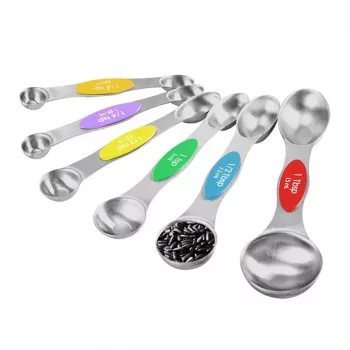
For most kitchens, stainless steel measuring spoons are the better long-term choice. They’re tougher, more stable with hot or oily ingredients, and less likely to warp or retain odors than plastic. That said, plastic can still make sense for lightweight sets, bright color-coded measuring, or tight budgets.
Stainless steel spoons typically hold their shape for years, even with frequent dishwasher cycles and heavy use. Plastic spoons can bend, chip, or warp—especially if they’re left near heat or run through high-heat drying—leading to subtle inaccuracies (like a slightly flattened bowl or distorted rim).
If measuring near the stove—think hot syrup, melted butter, or simmering sauces—stainless steel is safer and more predictable. Plastic is more prone to softening when exposed to high temperatures, which can affect both handling and measurement consistency.
Stainless steel resists staining from turmeric, tomato paste, and spices, and it won’t hold onto smells from garlic, onion powder, or fish sauce. Some plastics can absorb odors or discolor over time, even if they’re technically dishwasher-safe.
Plastic sets are often lighter and sometimes have thicker, softer handles that feel easy to grip. Stainless steel can be thinner and more compact, which is great for fitting into narrow spice jars, but the edges on cheaper sets can feel less comfortable. Look for smooth, rounded edges and engraved measurement markings for a better experience.
Choose stainless steel if you want longevity, easy cleaning, and consistent measuring. Choose plastic if you prefer color-coded sizes, a lighter feel, or you’re outfitting a starter kitchen. For a deeper comparison and shopping tips, visit the full guide on stainless steel vs. plastic measuring spoons.
Quality stainless steel measuring spoons are designed to resist rust, even with regular dishwasher use. To avoid spotting, dry them promptly and store them in a low-humidity area, especially if your set includes any non-stainless rivets or rings.











Leave a comment