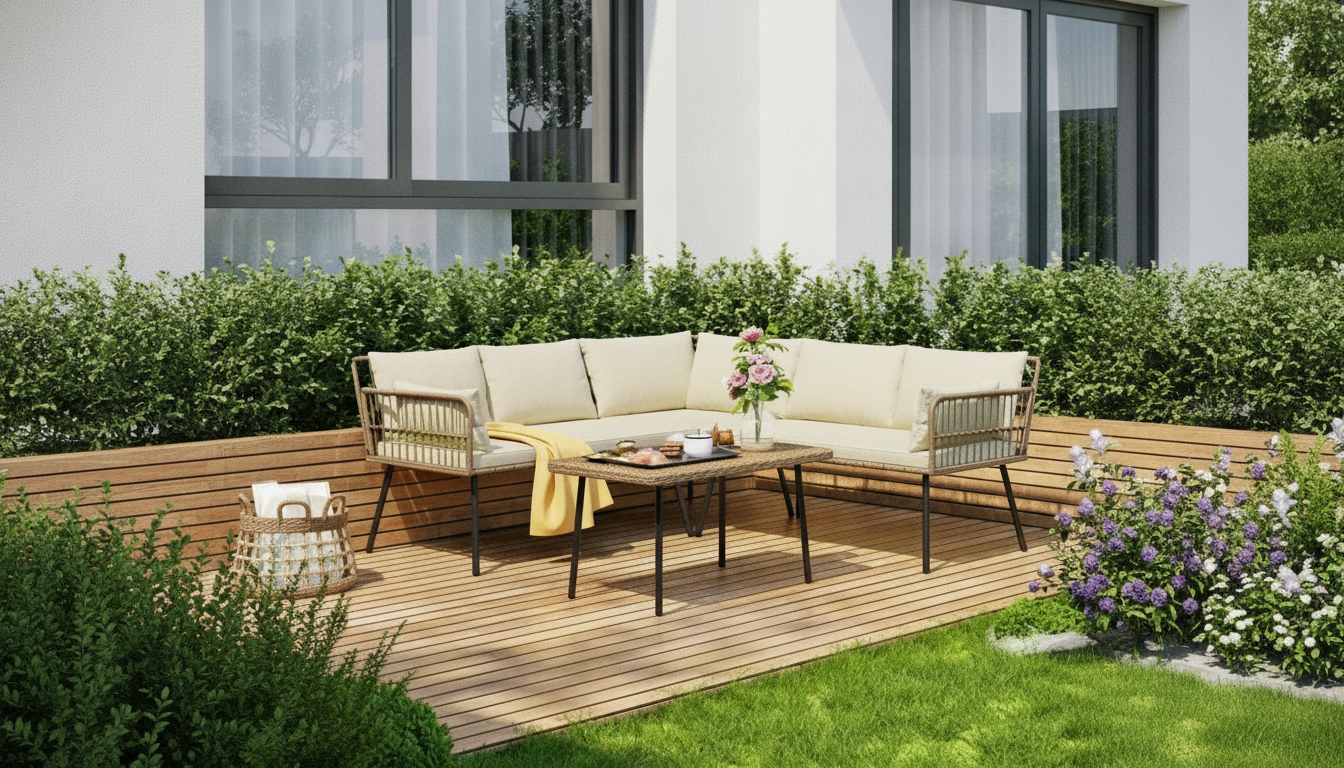
A 4-piece patio furniture set creates an easy, coordinated outdoor seating area without the guesswork of matching separate pieces. With a compact footprint and balanced seating, it’s well-suited for patios, decks, balconies, and poolside corners where comfort, durability, and everyday practicality matter.
A well-proportioned set helps an outdoor area feel “finished” without crowding it. Because the pieces are designed to work together, the scale is typically more consistent than mixing individual chairs and tables.
Most 4-piece sets are designed around the same goal: comfortable seating for two to four people, plus a central spot to set everyday items. That “anchor” table is what keeps the area tidy and functional.
| Outdoor area | Suggested arrangement | Spacing tips |
|---|---|---|
| Small balcony | Two chairs + table; place the larger seat against the wall/rail | Leave a clear walking lane to the door; keep chair backs off railings for airflow |
| Narrow deck | Seat pieces in a line with the table centered or slightly offset | Maintain comfortable pass-through space along the house-side path |
| Square patio | Face seats toward each other with the table centered | Angle chairs slightly to open the circle and avoid knee bumps |
| Poolside corner | Chairs angled for lounging with table between; larger seat in shade | Keep furniture out of splash zones; use a mat to reduce grit abrasion |
Comfort isn’t just about thick cushions—small design choices shape how often the set gets used. If the seating feels natural for both lounging and casual conversation, it becomes a default hangout spot.
Outdoor furniture performs best when it matches local conditions. If your space gets intense afternoon sun, frequent rain, or big seasonal shifts, plan for protection and quick dry-down so the set stays inviting.
A simple routine goes a long way: keep surfaces free of gritty buildup, let cushions dry fully, and address small issues before they become permanent. For homes with kids or high-traffic walkways, also keep stability in mind and avoid placing furniture where it could be bumped toward edges; the CPSC furniture safety guidance is a helpful reference for reducing tip-over and stability risks.
| Timing | Task | Why it helps |
|---|---|---|
| Spring setup | Tighten hardware; wipe frames; check glides/feet | Prevents wobble and protects surfaces from scratches |
| Mid-season | Wash cushion covers; spot-clean stains quickly | Reduces set-in stains and keeps fabric fresh |
| Before storms | Secure or store cushions; move table items indoors | Prevents waterlogging and wind damage |
| End of season | Clean and dry everything; cover or store in a dry place | Minimizes mildew, corrosion, and off-season wear |
| Item | Details |
|---|---|
| Name | 4-Piece Patio Furniture Set |
| Price | 720.47 USD |
| Availability | In stock |
| Product page | https://furniturebazaar.shop/4-piece-patio-furniture-set/ |
Measure the full footprint and add clearance for pulling chairs out and walking through comfortably; a practical rule of thumb is to keep about 30–36 inches of pass-through space where people commonly walk.
It depends on your climate and the materials, but most sets last longer with breathable covers and a plan to keep cushions dry. In harsh winters or extended wet periods, storing cushions (and covering or moving the set to a protected area) helps prevent premature wear.
Let cushions dry completely after rain, clean as needed with mild soap and water, and store them in a dry, ventilated place. Avoid sealing even slightly damp cushions under tight covers, since trapped moisture can lead to mildew.








Leave a comment